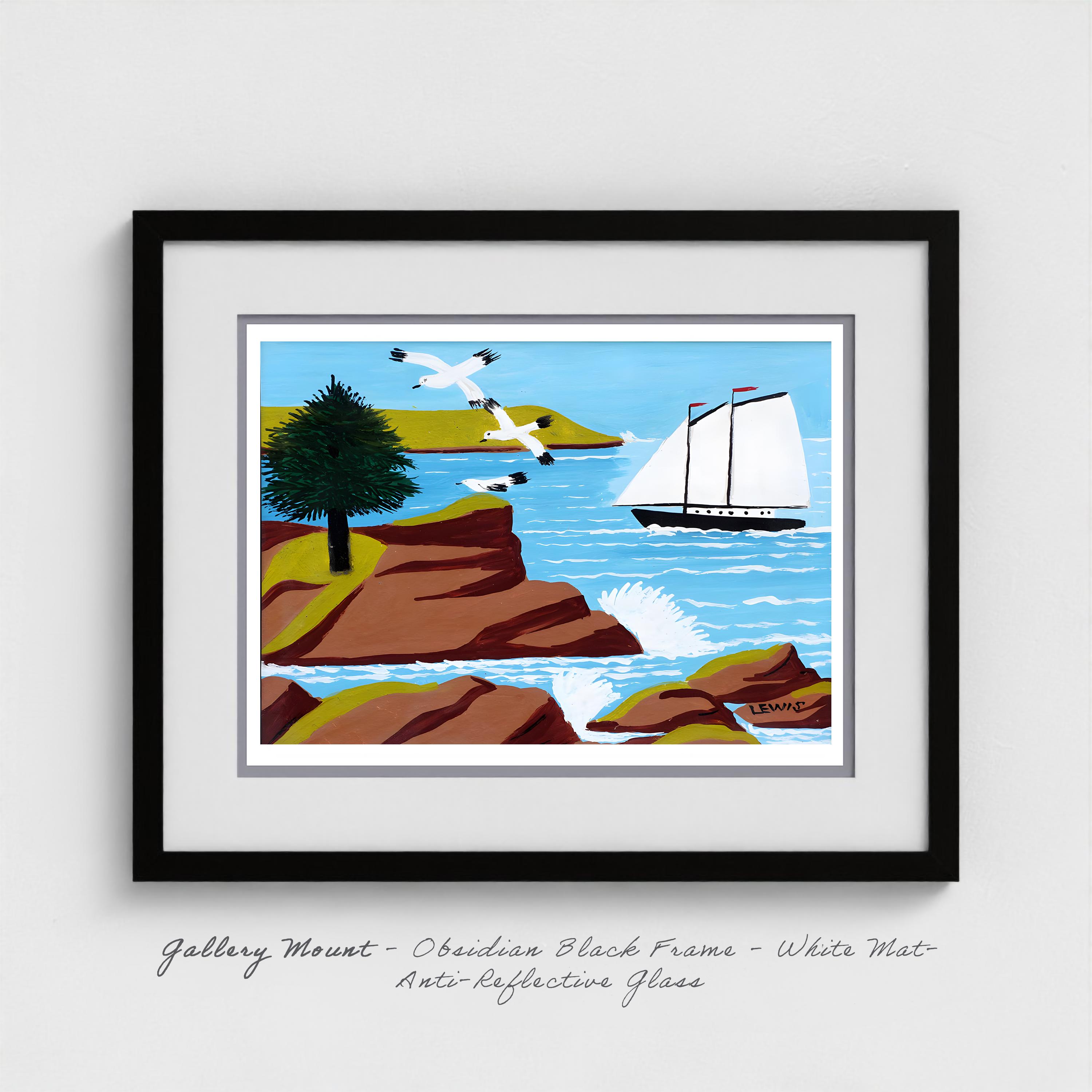
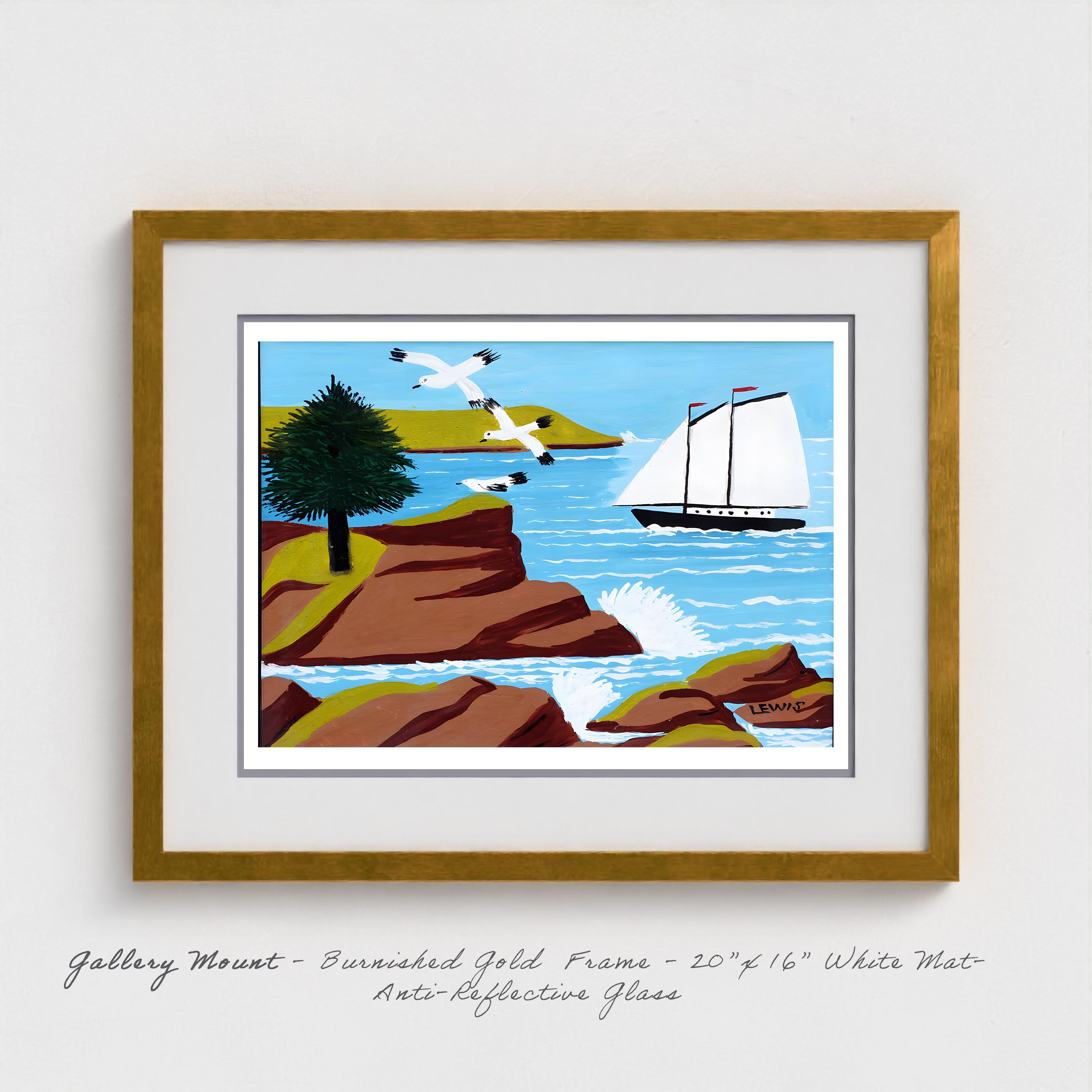
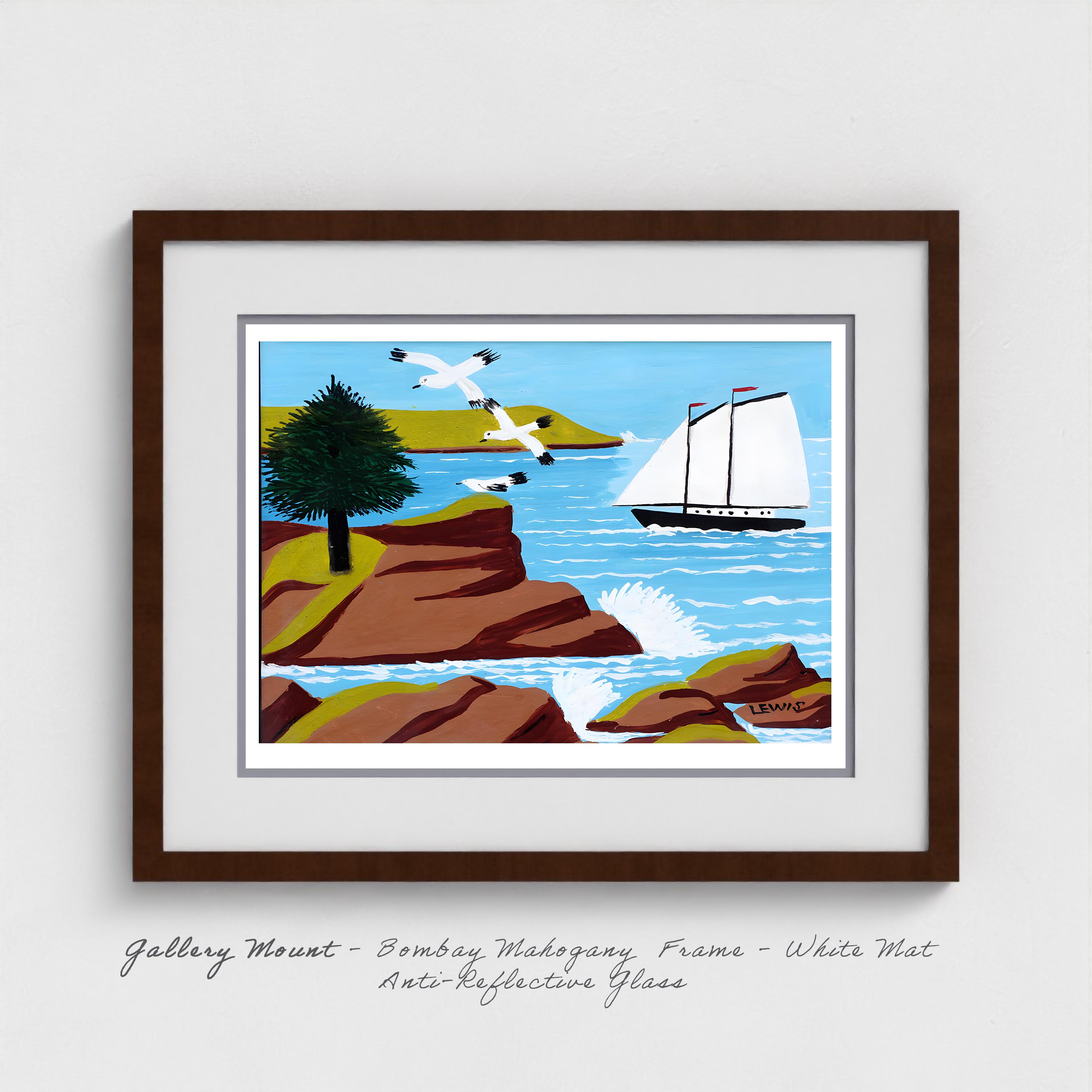
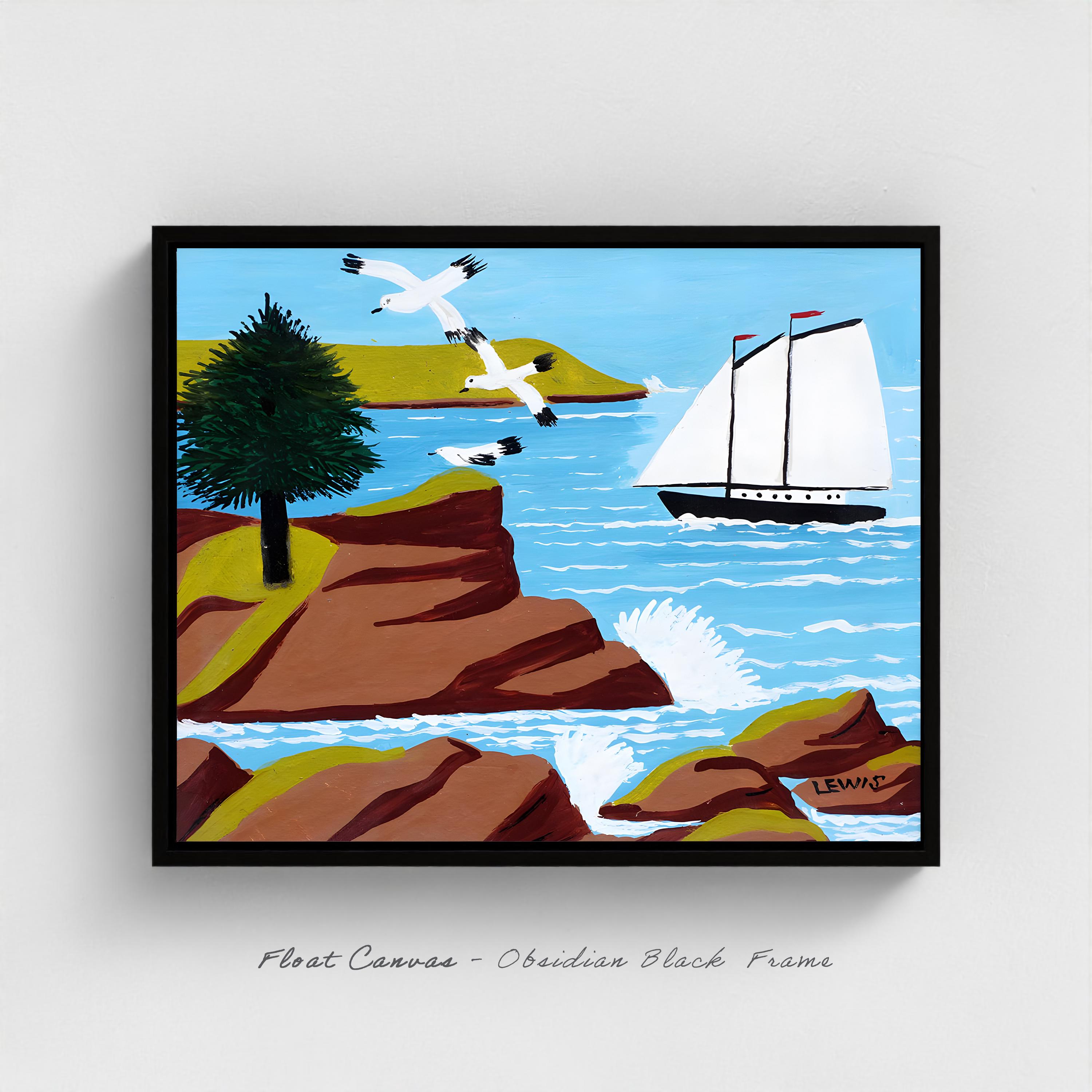
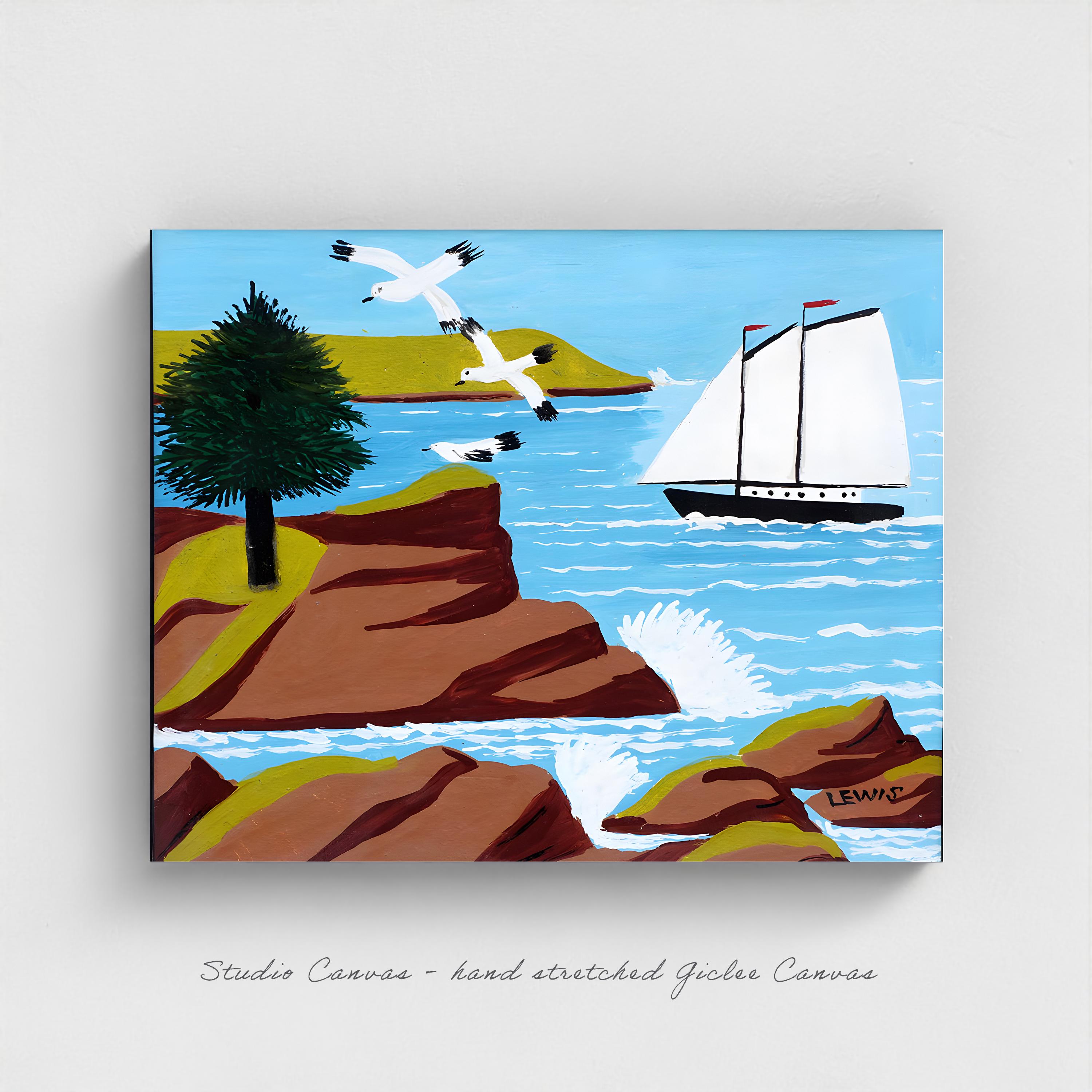
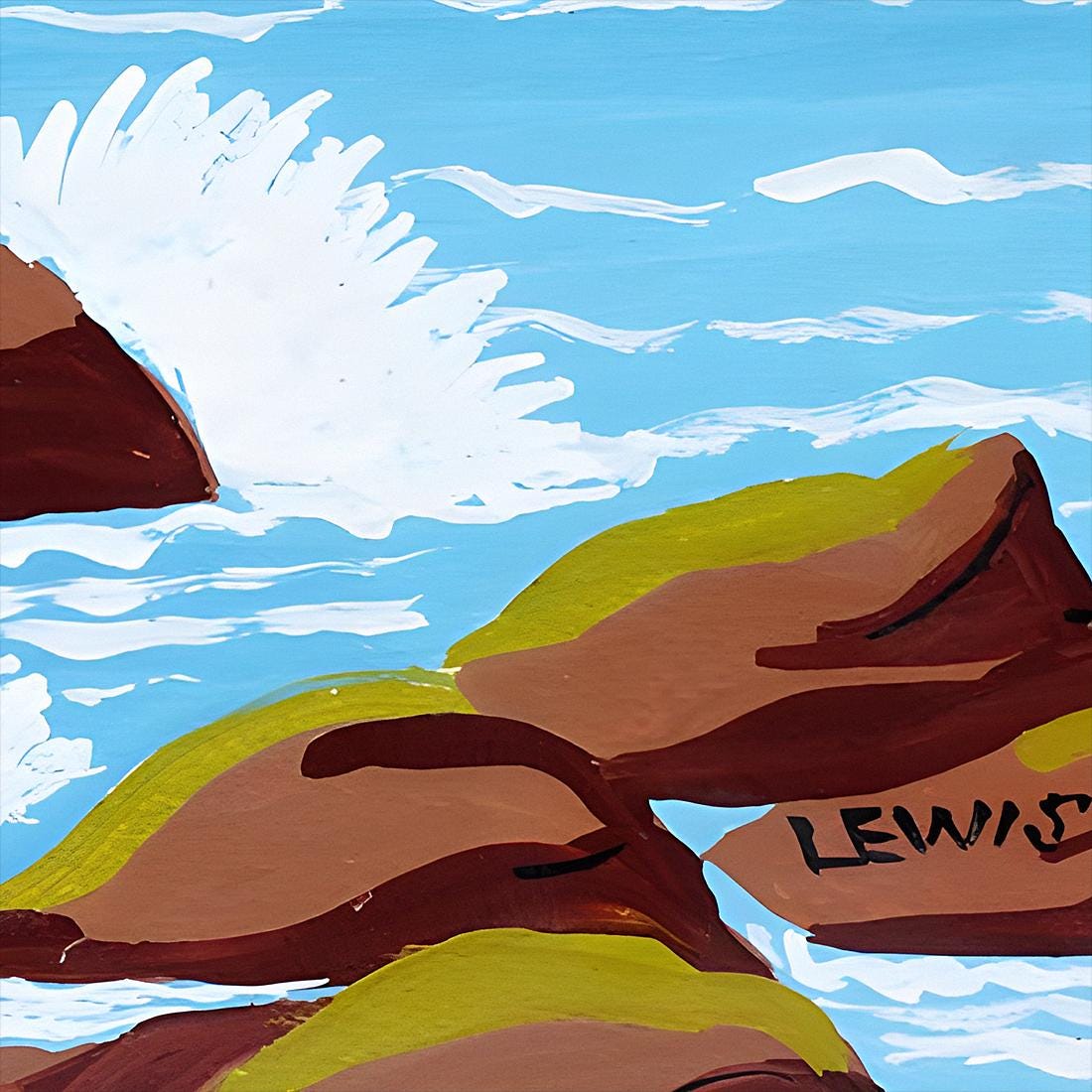
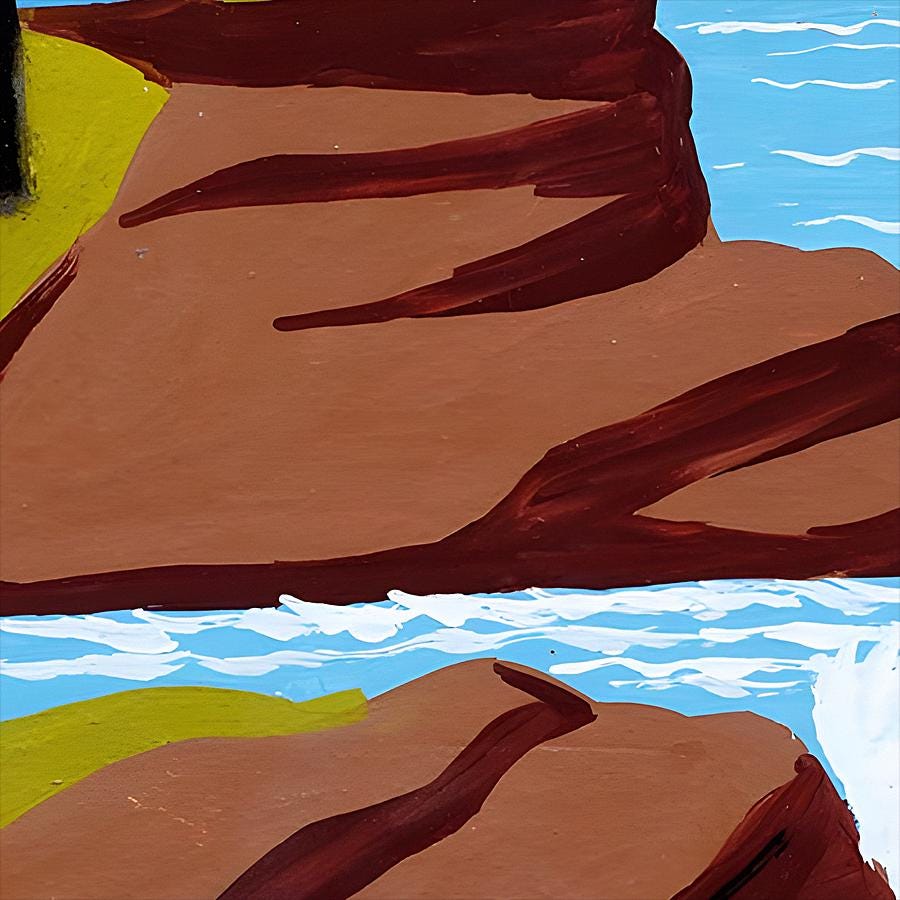

Maud Lewis Edge of Digby Harbour 1962 Giclee Canvas Print | Nova Scotia Folk Art | Maritime Fishing Village | Canadian Harbour Painting
$91.46
Details
In 1962, twenty-four years after walking six miles from Digby to answer a fish peddler's advertisement for a housekeeper, Maud Lewis painted the harbour town that had witnessed her life's transformation. Bent over an eleven-by-thirteen-inch board in her cramped Marshalltown cottage, she depicted *Edge of Digby Harbour* — the waterfront where Everett bought fish from boats at the wharf before peddling door-to-door, the shoreline visible from Aunt Ida's house where Maud had lived after her parents' deaths, the Maritime fishing village that marked the dividing line between her tragic past and uncertain future. Each brushstroke carried memory: the wharf where opportunity began, the town where heartbreak ended, the harbour that connected everything.
Digby held profound significance for Maud Lewis. After her father John died in 1935 and mother Agnes followed in 1937, Maud was left with nothing. Her brother Charles inherited the family home in Yarmouth, and when his marriage collapsed later in 1937, he let the lease go. Maud — thirty-four years old, crippled by arthritis, carrying the shame of an illegitimate daughter placed for adoption nine years earlier — had nowhere to go. Her maternal aunt, Ida German (also spelled Germaine), offered refuge. Maud moved to Digby to live with her.
She spent the rest of her life in Digby County. Every painting of Digby locations — the harbour, the gut, Point Prim, Bayview — emerged from direct observation, not imagination. Art historians note that her paintings were "inspired by childhood memories of the landscape and people around Yarmouth and South Ohio, as well as Digby locations such as Point Prim and Bayview." But Digby represented more than landscape inspiration. Digby was where Maud's adult life truly began.
In autumn 1937, just months after moving in with Aunt Ida, Maud noticed an advertisement posted in local Digby stores. Everett Lewis, a forty-four-year-old fish peddler, sought a live-in housekeeper for his cottage in Marshalltown. One morning, Everett found Maud Dowley standing on his doorstep. She had walked from Aunt Ida's house in Digby, through the small village of Conway, along the railroad tracks to Marshalltown — approximately six miles on foot, arthritic body managing terrain that would challenge healthy walkers.
Maud's family and community, particularly Aunt Ida, disapproved of the pairing. Everett had a reputation for inappropriate behaviour. Yet within weeks, Maud and Everett married. She exchanged Aunt Ida's respectable Digby home for Everett's one-room shack without electricity or plumbing. It seemed like descent into worse poverty. But it offered something Aunt Ida's charity couldn't provide: independence, purpose, partnership on her own terms.
Everett's fish peddling tied him directly to Digby Harbour. Before marriage, he made his living selling fish door-to-door throughout Digby County. He had an old Model T Ford that allowed him to bring fish bought from boats at Digby wharves to farms and homes further inland. The harbour was his supply source, the boats his marketplace. When fish came in, Everett was there, haggling with captains, selecting stock, loading his Model T for daily rounds.
*Edge of Digby Harbour* captures this working waterfront. The "edge" suggests peripheral perspective — not the main commercial wharves where large vessels unloaded, but the margins where smaller boats moored, where everyday commerce happened away from tourist postcards. Maud painted what Everett knew: the practical harbour of working fishermen, not the picturesque harbour of summer visitors.
By 1962, Maud had been painting seriously for over two decades. The year marked a pivotal moment: gallerist Willard Ferguson discovered Maud's work and obtained legal copyright to produce high-quality silkscreen reproductions. Ferguson recognized genius where others saw charming folk craft. His nine-colour silk-screen prints — created by skilled artists applying nine stencils one at a time, waiting for each to dry — brought Maud's images to wider audiences while she still lived.
Yet national fame remained two years distant. The transformative 1964 *Star Weekly* article and 1965 CBC *Telescope* documentary hadn't yet catapulted Maud into Canadian consciousness. In 1962, she still worked in relative obscurity, selling paintings for two or three dollars to summer tourists and local buyers. Stopping at Mrs. Lewis's cottage to buy a painting was a regional summer ritual, but recognition beyond Digby County remained limited.
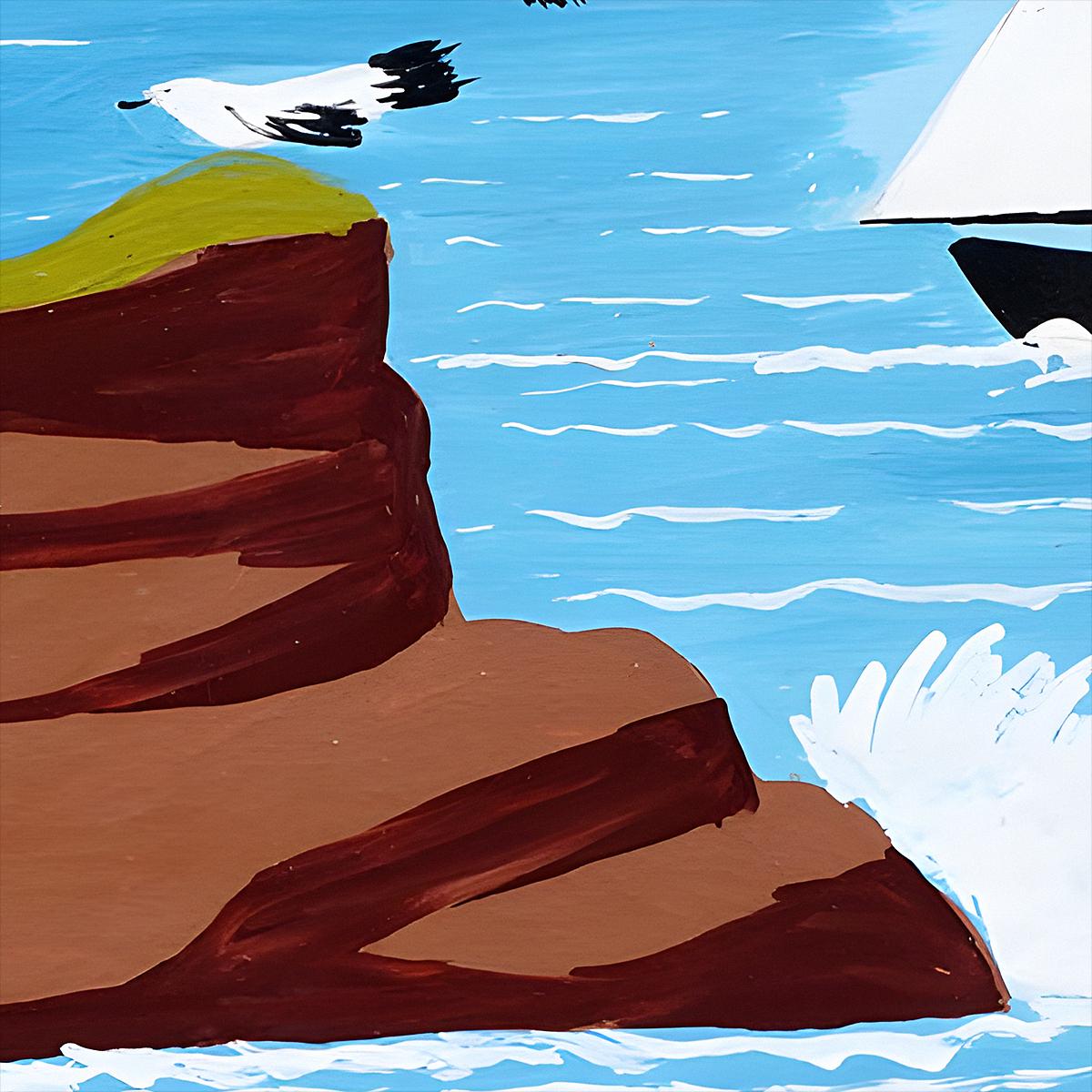
The technical qualities of *Edge of Digby Harbour* demonstrate Maud's mature middle period. Art dealer Ian Muncaster notes that her oils from the late 1950s and early 1960s show more fluid brushwork and detailed composition than her later arthritic-restricted work. By 1962, juvenile rheumatoid arthritis had gnarled her hands but hadn't yet rendered painting nearly impossible. She could still work with relative fluidity, applying unmixed pigments in characteristic rectilinear strokes determined partly by artistic choice, partly by physical limitation.
Her technique remained consistent: coat the board entirely white, sketch simple outline, apply paint directly from tube without blending. She never mixed colours, creating visual harmony through unexpected juxtapositions of pure pigment. For Digby Harbour, this meant bright boats against blue water, colourful buildings along the waterfront, perhaps touches of green suggesting coastal vegetation, the whole scene rendered without shadows, eternally sunlit.
Materials remained scavenged. Neighbours dropped off half-empty house paint cans. Fishermen from Digby wharves provided boat enamel — the same paint protecting vessels Maud depicted, applied to her panels in service of art rather than waterproofing. Everett collected pulpboard and Masonite scraps, cutting boards to size in their cramped cottage. Everything Maud painted emerged from poverty's resourcefulness.
The harbour subject connected to broader Maritime economic culture. Digby Harbour served as major fishing port, processing scallops, lobster, and groundfish for markets across North America. The distinctive extreme tides of the Bay of Fundy — where Digby sits — created unique harbour challenges. Wharves needed extraordinary height to accommodate tide differences sometimes exceeding forty feet. At low tide, boats sat far below wharf level on exposed mud flats. At high tide, vessels floated nearly level with docks. Maud's harbour paintings capture this tidal reality, showing the high wharves needed to manage Fundy's dramatic water level changes.
*Edge of Digby Harbour* also reflects Maud's serial painting practice. She returned to successful subjects repeatedly, each time painting them slightly differently. She made dozens, perhaps hundreds, of harbour scenes across her career. The serial nature was partly customer-driven — she repeated compositions that sold well while discarding unpopular ones — but also reflected genuine affection for Maritime fishing culture that defined her region.
By 1962, Maud understood her market. Summer tourists wanted cheerful Maritime scenes. Local buyers sought nostalgic visions of fishing heritage. She delivered both, painting Digby Harbour as eternally productive, boats always present, work always available, community always thriving. The optimistic vision contradicted fishing's harsh economic realities — declining fish stocks, mechanization threatening traditional methods, young people leaving for urban opportunities — but provided comfort precisely because it preserved what was disappearing.
Painting Digby Harbour in 1962 meant documenting personal history. Every wharf Maud depicted connected to Everett's fish peddling years. Every boat represented fishermen who might have been Everett's suppliers. The harbour was where her adult life began — not at Aunt Ida's respectable address, but at wharves where working men sold catch to enable Everett's door-to-door rounds, which eventually enabled Maud's painting career.
The painting stands as testament to transformation. Digby was where Maud arrived broken — parents dead, daughter lost, body failing, future bleak. It was where she chose risk over safety, accepting Everett despite family disapproval, walking six miles toward uncertain partnership. It was where she found purpose: marriage to difficult man who nevertheless encouraged her painting, provided materials, sold her work, enabled the artistic career that would eventually make her Canada's most beloved folk artist.
*Edge of Digby Harbour* captures all this history without depicting it directly. The harbour simply exists — boats moored, wharves standing, water reflecting sky, the Maritime fishing culture persisting as it had for generations. But for Maud Lewis, painting this harbour meant painting the place that saved her, the waterfront that connected everything, the edge where her life turned from tragedy toward legacy.
**WHAT SETS ARTACCESSGALLERY APART:**
✓ Giclee ink pigments ensure 100+ year fade resistance
✓ Colour accuracy that rivals the original masterpiece
✓ Advanced digital reproduction technique captures Lewis's middle-period fluid brushwork
✓ Investment-grade artwork for serious collectors
✓ All Gallery Mount Prints include Certificate of Reproduction Authenticity and artist biography affixed au verso
**ICHORPRINTS PRODUCT OPTIONS:**
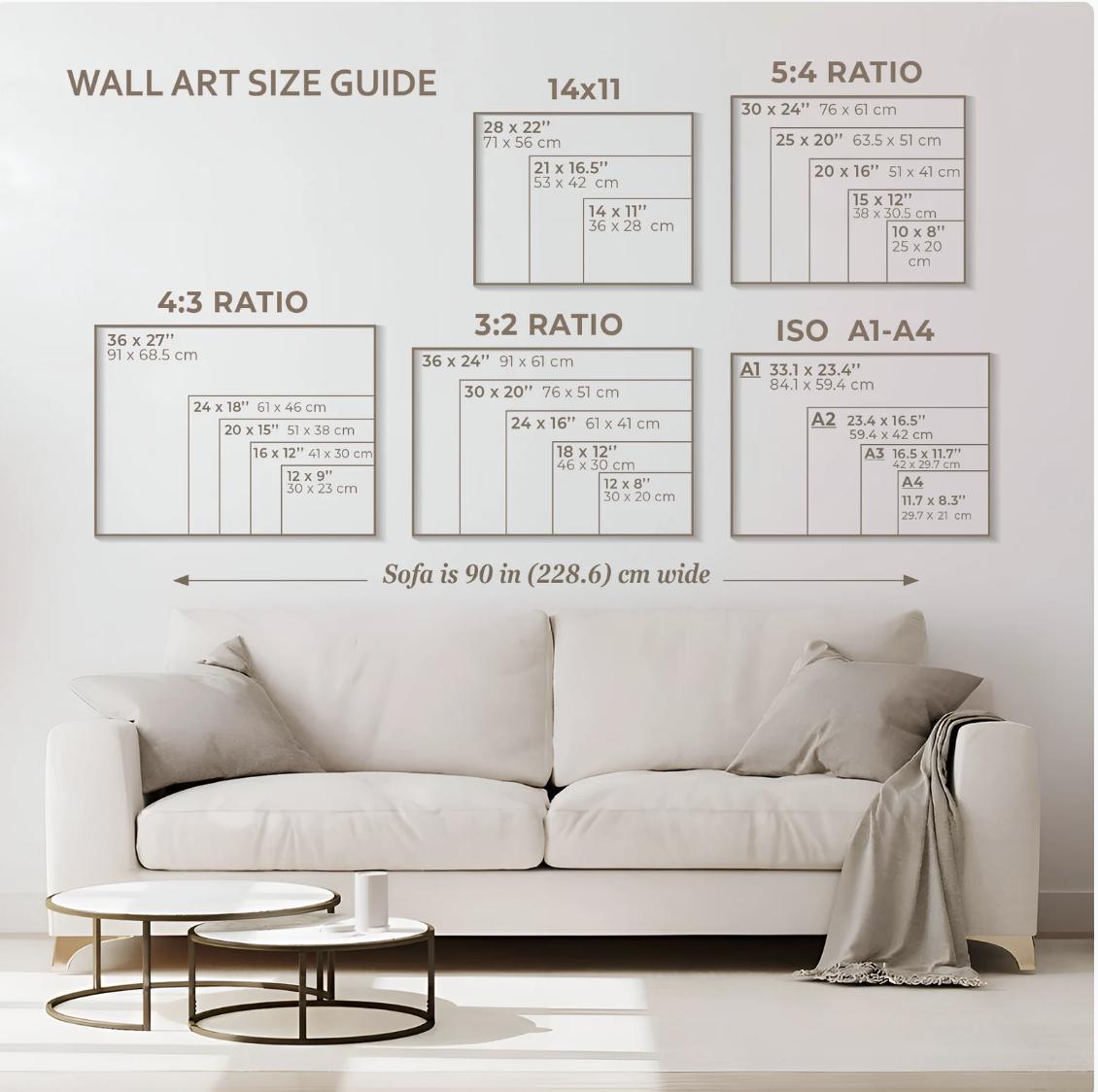
**Gallery Mount** (Image: 12"x16" | Frame Exterior: 19"x23")
Giclee Fine Art Print on archival paper
Protected by 16"x20" glass with acrylic glaze
2" heavy Snow White Mount with .5" fine white/grey margins
Choice of Burnished Gold, Bombay Mahogany, or Obsidian Black hardwood frame
Ready to hang
**Float Frame Canvas** (Canvas: 16"x20" | Frame Exterior: 19"x23")
Giclee pigment canvas stretched over hardwood
Set within Obsidian Black float frame
Creates stunning dimensional depth
Ready to hang
**Studio Canvas** (16"x20")
Stretched over premium hardwood bars
Perfect minimalist presentation
Ready to hang or custom frame
Gallery-wrapped edges
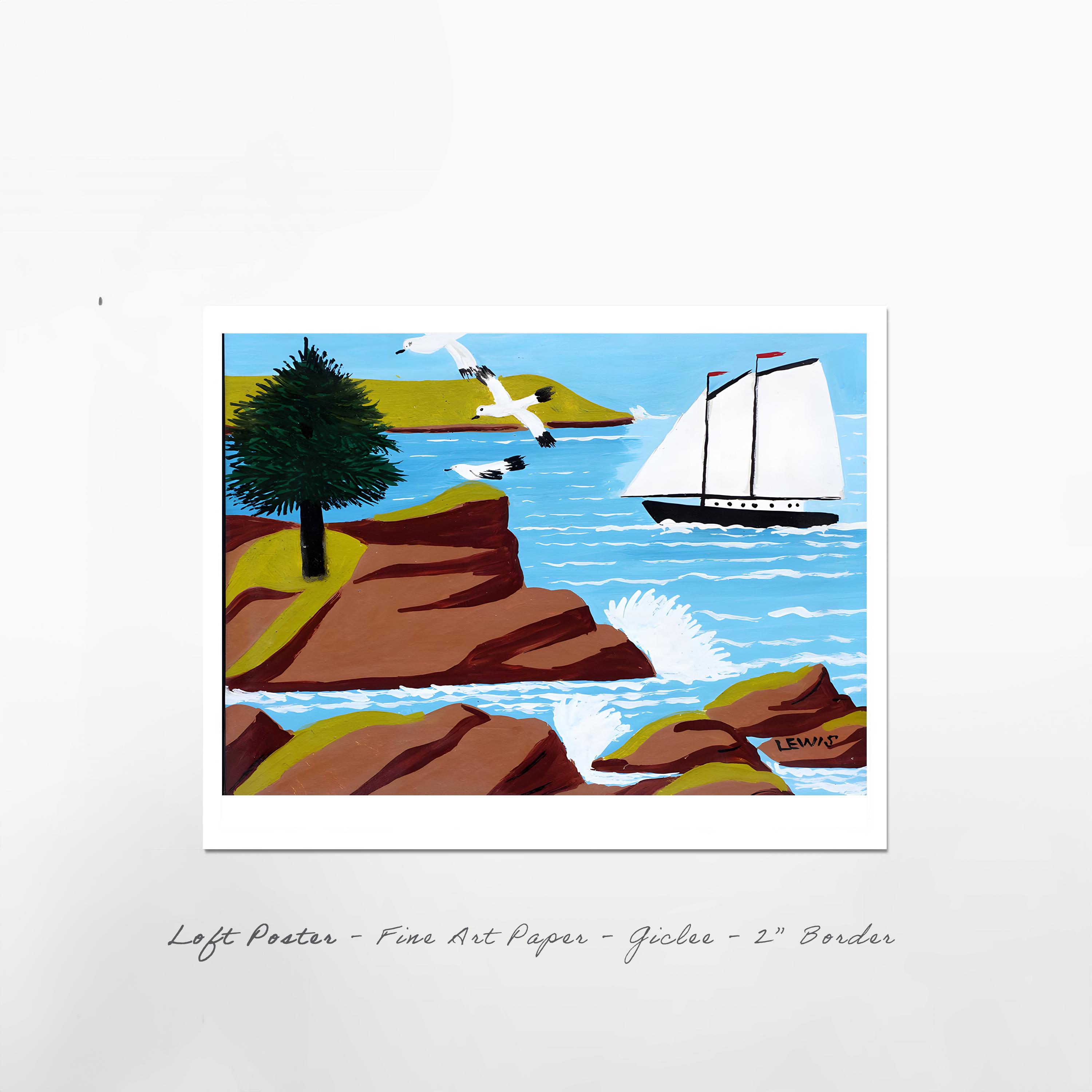
**Loft Poster** (Image: 12"x16" | Paper: 16"x20")
Fine Art Paper with 2" pure white margin
Perfect for custom framing
Affordable museum-quality option
Ready to display
Bring home the painting that captures the harbour where Maud Lewis's life transformed — where a desperate walk from Aunt Ida's house led to marriage, partnership, and the artistic career that made her Canada's folk art treasure.
Shipping from Canada
Processing time
1-3 weeks
Customs and import taxes
Buyers are responsible for any customs and import taxes that may apply. I'm not responsible for delays due to customs.
Payment Options
Returns & Exchanges
I don't accept returns, exchanges, or cancellations
But please contact me if you have any problems with your order.
Privacy policy
Ichor Prints Art Collective Privacy Policy
1. Personal Information We Collect
To fulfill your order, you must provide us with certain information (authorized by Etsy to provide to us), such as your name, email address, postal address, payment information, and the details of the product you’re ordering. You may also choose to provide us with additional personal information for custom orders or inquiries.
2. Why We Need Your Information and How We Use It
We rely on several legal bases to collect, use, and share your information, including:
to provide our services, fulfill your order, settle disputes, or provide customer support;
when you have provided your affirmative consent, which you may revoke at any time;
if necessary to comply with a legal obligation or court order or in connection with a legal claim, such as retaining information about your purchases if required by tax law; and
as necessary for our legitimate interests, if those legitimate interests are not overridden by your rights or interests.
3. Information Sharing and Disclosure
Information about our customers is important to our business. We share your personal information for very limited reasons and in limited circumstances, as follows:
Etsy: We share information with Etsy as necessary to provide you with our services and comply with obligations under both the Etsy Seller Policy and Etsy Terms of Use.
Service Providers: We engage certain trusted third parties to perform functions and provide services to our shop, such as delivery companies. We will share your personal information with these third parties, but only to the extent necessary to perform these services.
Compliance with Laws: We may collect, use, retain, and share your information if we have a good faith belief that it is reasonably necessary to respond to legal process or to government requests; enforce our agreements, terms, and policies; prevent, investigate, and address fraud and other illegal activity, security, or technical issues; or protect the rights, property, and safety of our customers, or others.
4. Data Retention
We retain your personal information only for as long as necessary to provide you with our services and as described in our Privacy Policy. However, we may also be required to retain this information to comply with legal and regulatory obligations, to resolve disputes, and to enforce our agreements. We generally keep your data for the following time period: 4 years.
5. Your Rights
You have a number of rights in relation to your personal information. You can access, correct, or delete your personal information held by Etsy, request that we delete or change that information, object to our processing of your information, or request that we provide your information in a portable format.
6. Contact Information
For purposes of EU data protection law, we, Ichor Prints Art Collective, are the data controller of your personal information. If you have any questions or concerns, you may contact us at ETSY message board
Frequently Asked Questions
Are there any paper recommendations?
heavyweight paper or card stock is a perfect budget friendly choice. They range from glossy to a matte finish. Premium archival fine art paper with a slight watercolor or linen texture will result in the most authentic vintage art reproductions.
How do I go about framing my print?
The frames used in our shop listings are product photos, and are not physical frames that are sold. They make a frame matched perfectly to your media and matte, so usually you will need to bring in the physical picture and matte (if you use one) so they can cut a frame for it.
Here are a few sites with a huge variety of frames to choose from:
𝐔.𝐒.
frameiteasy.com
finerworks.com
framebridge.com
𝐂𝐚𝐧𝐚𝐝𝐚:
artalo.ca
framehaus.ca
How do I go about printing the file I downloaded?
While you can print at local copy centres like Staples, Walgreens, Walmart etc., print quality varies. If using a home printer, colour outcome/quality will vary.
If you want top quality results, online printers are your best choice
𝐒𝐞𝐧𝐝 𝐨𝐧𝐥𝐲 𝐟𝐢𝐥𝐞𝐬, 𝐭𝐨 𝐩𝐫𝐢𝐧𝐭 𝐬𝐞𝐫𝐯𝐢𝐜𝐞𝐬 - 𝐧𝐨𝐭 𝐥𝐢𝐧𝐤𝐬.
Recommended online print services:
U.S. printing service:
finerworks.com
mpix.com
posterjack.com
Canada printing service:
posterjack.ca
pictorem.com
henrysphotocentre.com
U.K. printing service:
theprintspace.co.uk
European printing service:
beyondprint.eu
Finally...if you want a Matte around your print to highlight it within a frame, often the frame shops will have thick Matte that they hand cut
I downloaded the file, can I use it for commercial purposes?
◆ a file from Ichor Prints Vintage Art Collective is to be used solely for your own personal use
◆ You are not permitted to use files to edit or make changes to then, in turn, use for commercial use or resale in any form
◆ Each design is either fully original or has been carefully digitally remastered and altered from its original version making each new derivative work unique to Ichor Prints Vintage Art Collective. As such, all works are copyrighted.
© Ichor Prints Vintage Art Collective
Where will I find my digital download?
To access your digital files from your account:
Sign in to Etsy.com on a web browser (not the Etsy app) and go to "Your account".
Go to "Purchases and reviews".
ETSY DOWNLOAD HELP LINK. https://www.etsy.com/ca/help/article/3949
Next to the order, select Download Files.
➡ If you don't see a download button, click the tiny grey arrow to the right of the order.
This brings you to the Downloads page.
If your payment is still processing, the Download Files button will be grey.
Can I get a Custom Size?
𝐈 𝐩𝐫𝐨𝐯𝐢𝐝𝐞 𝐨𝐧𝐥𝐲 𝐎𝐍𝐄 (𝟏) 𝐫𝐞𝐬𝐢𝐳𝐞 𝐩𝐞𝐫 𝐥𝐢𝐬𝐭𝐢𝐧𝐠. (ex. If purchasing gallery set, I provide only ONE resize for ONE design). Keep in mind: A narrow image cannot be expanded into a wider image. A wide image cannot be made into a narrow image without cropping some of the original image. Original art is designed to be pleasing to the eye, both in width and height. Current turn around time for resize requests is 2-3 business days. Please reach out to me prior to purchase to verify resize can be done. 𝐄𝐱𝐜𝐥𝐮𝐝𝐞𝐬 𝐓𝐕 𝐚𝐫𝐭 𝐄𝐱𝐜𝐥𝐮𝐝𝐞𝐬 𝐜𝐫𝐞𝐚𝐭𝐢𝐧𝐠 / 𝐚𝐧𝐝 𝐨𝐫 / 𝐫𝐞𝐬𝐢𝐳𝐢𝐧𝐠 𝐬𝐩𝐥𝐢𝐭 𝐩𝐚𝐧𝐞𝐥 𝐬𝐞𝐭𝐬 𝐄𝐱𝐜𝐥𝐮𝐝𝐞𝐬 𝐚𝐫𝐭𝐰𝐨𝐫𝐤 𝐢𝐧 𝐬𝐪𝐮𝐚𝐫𝐞 𝐝𝐢𝐦𝐞𝐧𝐬𝐢𝐨𝐧𝐬
𝐖𝐡𝐞𝐫𝐞 𝐜𝐚𝐧 𝐈 𝐟𝐢𝐧𝐝 𝐦𝐲 𝐝𝐢𝐠𝐢𝐭𝐚𝐥 𝐩𝐮𝐫𝐜𝐡𝐚𝐬𝐞𝐬 𝐢𝐧 𝐦𝐲 𝐚𝐜𝐜𝐨𝐮𝐧𝐭?
To access your digital files from your Etsy account: Sign in to Etsy.com on a web browser (not the Etsy app) and go to "Your account". Go to "Purchases and reviews". Next to the order, select Download Files. ➡ If you don't see a download button, click the tiny grey arrow to the right of the order. This brings you to the Downloads page. If payment is still processing, the Download Files button will be grey. Please save the files to your device immediately after purchase. When a design is discontinued, it will be deleted from my cloud storage within 6 months to make room for new designs.